
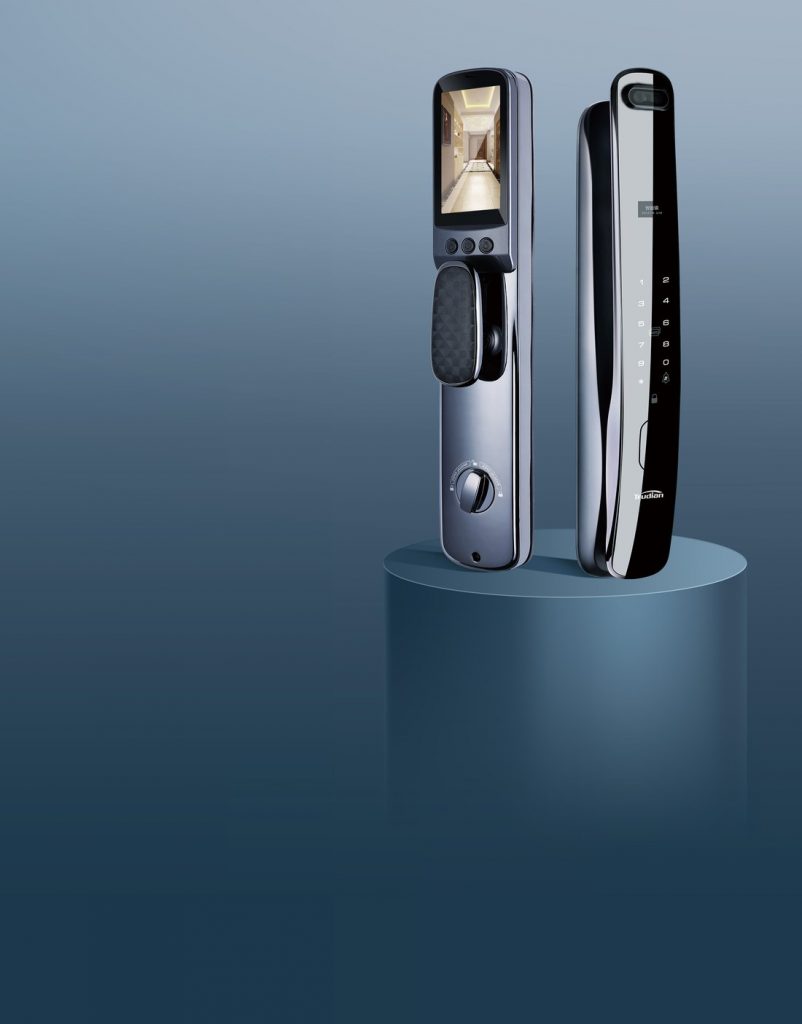
A 2D camera compares a picture of a face with a stored picture. A 3D sensor measures depth. That single difference decides whether a printed photo, a phone screen or a video clip can open your door.
What structured light actually does
An infrared projector throws a dot pattern onto the face; a second sensor reads how the pattern deforms. A flat surface deforms it uniformly — which is exactly how a photo is rejected before the recognition algorithm even runs.
Why it matters in real buildings
Entrance doors get backlight from a bright street at night and direct sun in the afternoon. Depth measurement survives both, while 2D matching degrades badly. IR fill also means the lock works with no visible light at all.
What to ask a supplier
Ask for the false-accept rate on spoof attempts, not only on genuine users, and ask at what ambient temperature the module is still specified. A 40 °C rating sounds generous until the door faces west.
Takeaway
If a lock advertises “face unlock” without saying 3D, assume it is 2D and test it with a printed photo before you buy a container.